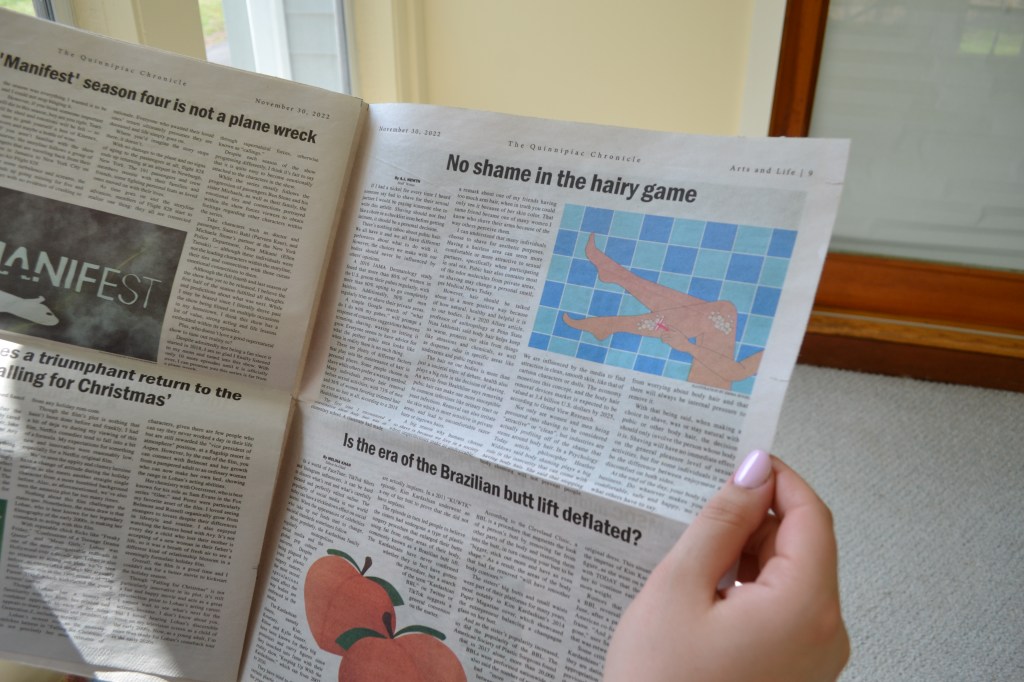
As an Associate Design Editor for The Chronicle at Quinnipiac University, I have had the opportunity to collaborate with a team of talented individuals to produce high-quality design work for the weekly issues. Through effective communication and keen attention to detail, I have contributed to publishing visually appealing and engaging content that a broad audience has seen.

As a designer, my approach to each piece involves a comprehensive understanding of the writer’s voice and perspective. I begin by carefully reading the article and communicating with the writer to ensure a shared vision for the design.
I aim to create a visually appealing layout that complements the content and enhances the reader’s experience. I consider various design elements, such as color schemes, fonts, and sizing, to effectively convey the desired message and evoke the appropriate emotions.
Each design is unique and reflective of the individual piece, with careful attention to ensure that the final product tells its own story. I meticulously review and adjust the design to achieve the desired outcome to provide the reader with a visually captivating and immersive experience.
Through my approach, I strive to deliver designs that meet and exceed expectations, focusing on creating a visual representation that accurately reflects the writer’s intentions and engages the reader’s attention.
Printed
Digital
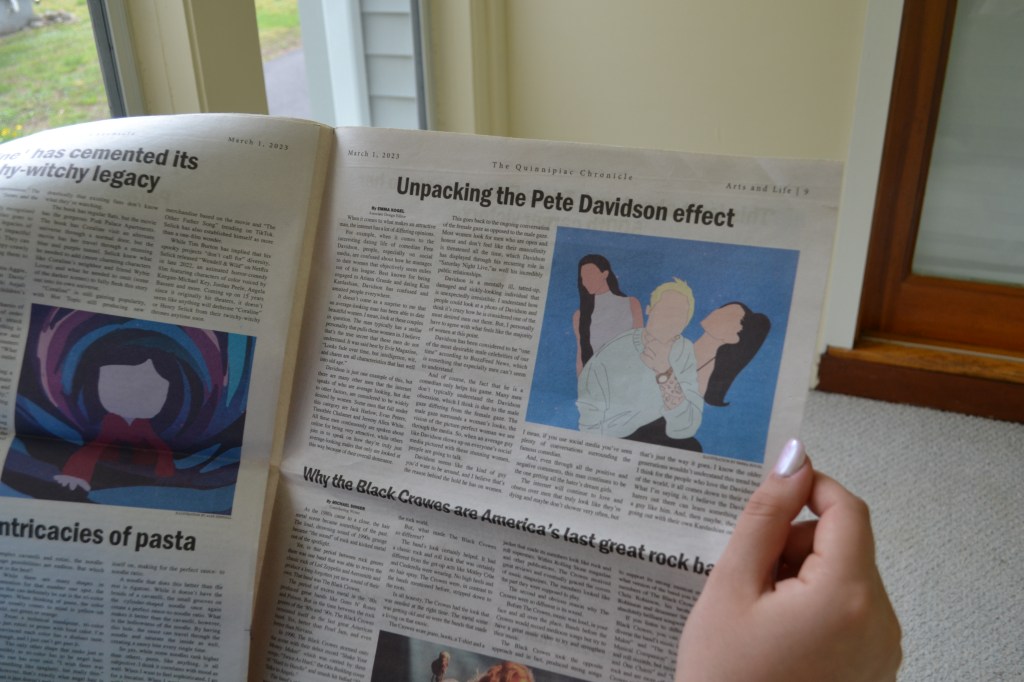

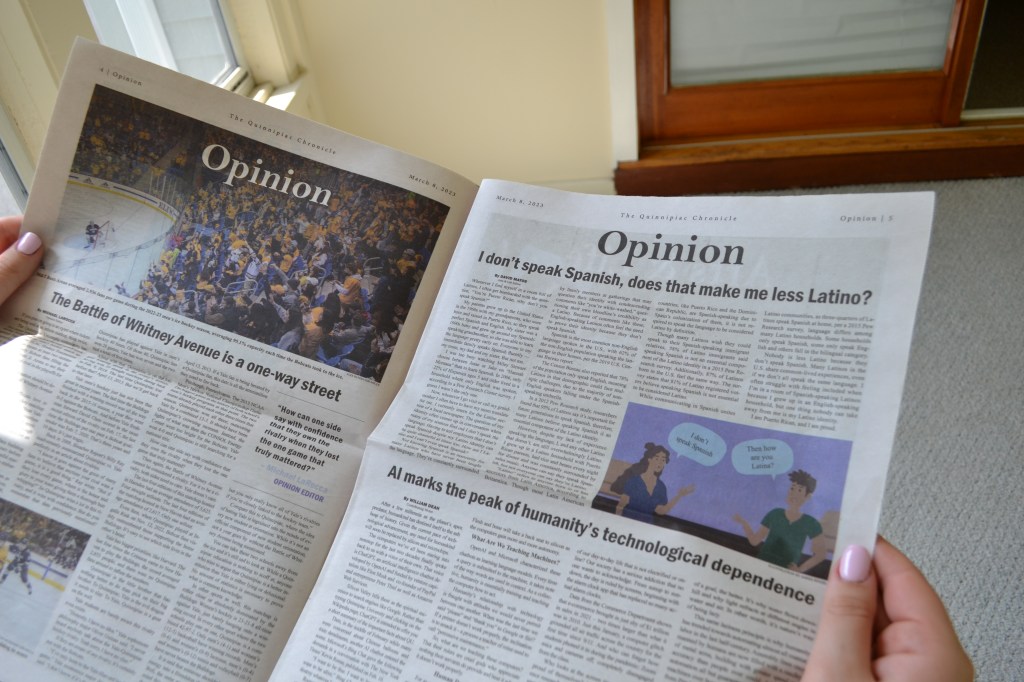

Learning the difference between RGB and CMYK color modes is essential in printing compared to online media. RGB (Red, Green, Blue) is the standard color mode for digital media such as websites, mobile apps, and social media platforms. In contrast, CMYK (Cyan, Magenta, Yellow, Black) color mode is used for print media such as magazines, brochures, and flyers. RGB is an additive color mode, creating colors by adding light. On the other hand, CMYK is a subtractive color mode, meaning colors are created by subtracting ink from white paper. This difference can lead to discrepancies between what is seen on a computer screen and what is printed. When converting RGB to CMYK for printing, some colors may need help to be reproduced accurately due to the limitations of the printing process. Therefore, working in CMYK color mode when designing for print is essential to ensure the colors will appear as intended in the final product.
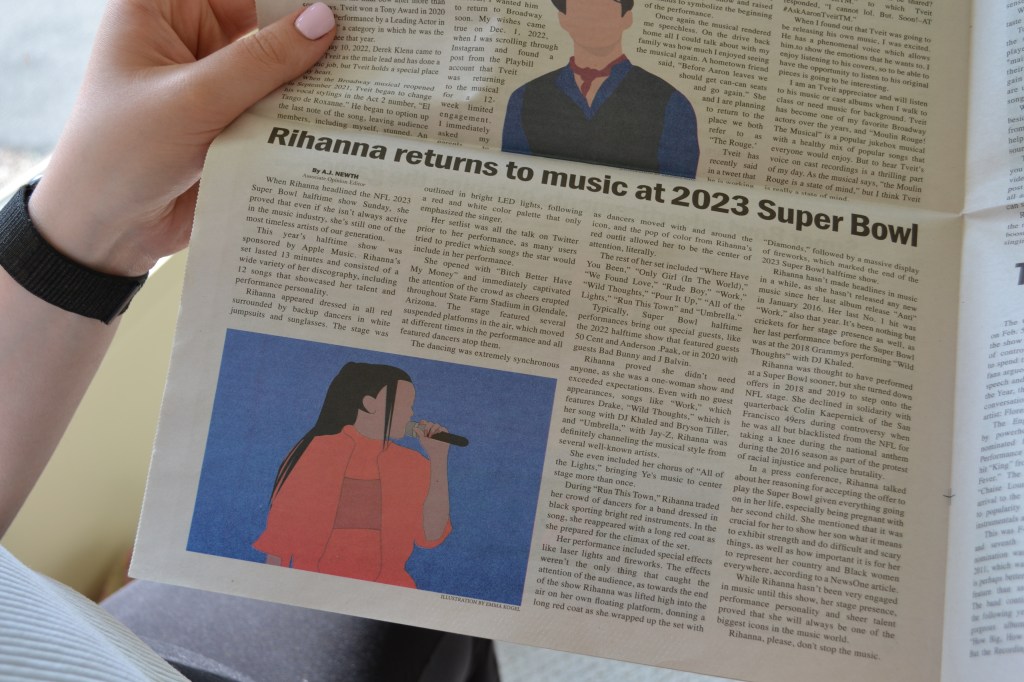

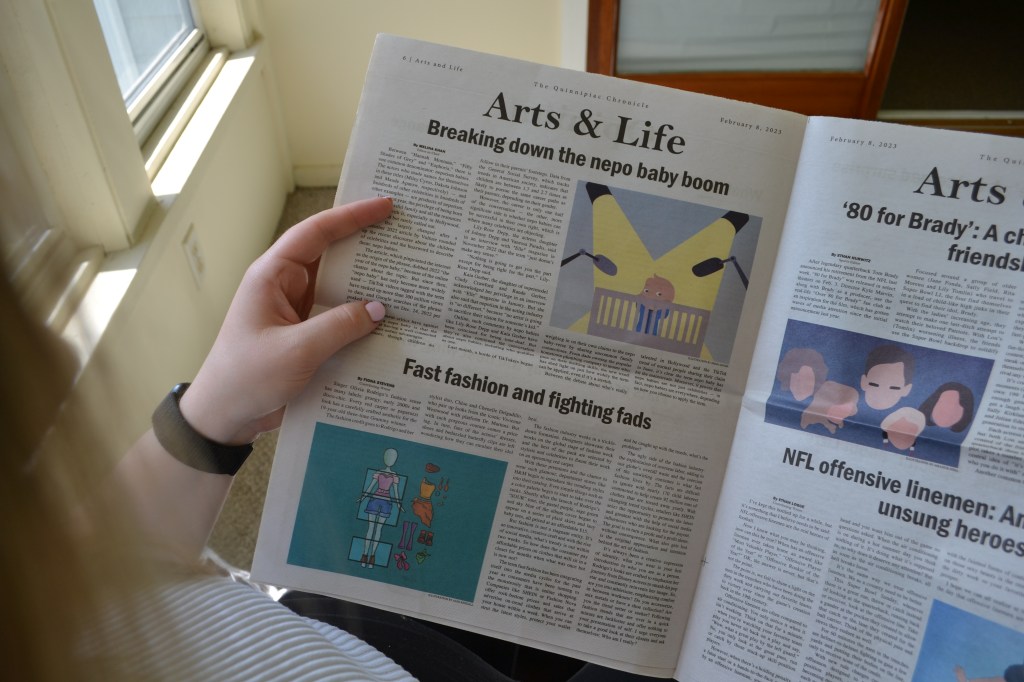


More Digital



Takeaways:
As a design editor for the Quinnipiac Chronicle, I gained a lot of valuable skills and experience that have helped me in my career. First and foremost, I learned the importance of effective communication and collaboration with other editorial team members. Working closely with writers, photographers, and other designers helped me better understand the entire editorial process and how all the pieces fit together to create a cohesive final product.
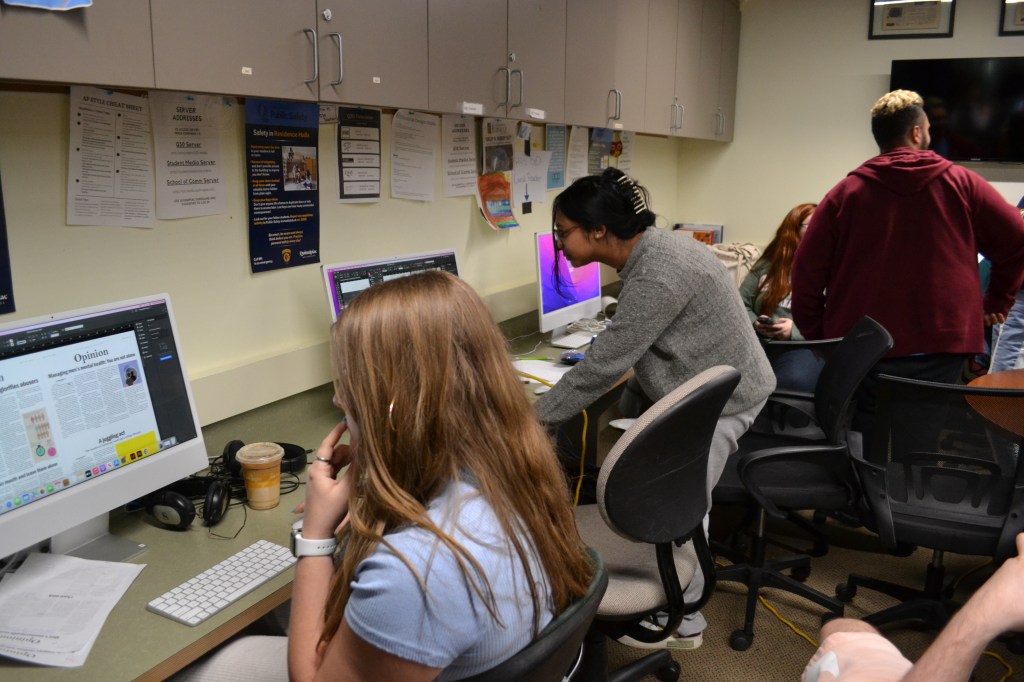
Additionally, I honed my design skills, becoming more proficient in software such as Adobe InDesign, Illustrator, and Photoshop. I also learned the importance of working under pressure and meeting tight deadlines, as well as the value of constructive criticism and feedback. Overall, my time as a design editor for the Quinnipiac Chronicle was a valuable learning experience that helped me become a more skilled and confident designer.
 Emma Kogel